Generator-first CLI Go backend + Svelte, Vue, React, and more

Schema-driven. Event-first. Generator-first.

Build secure products at generator speed.

Zex is an AI-native framework for teams who want the ergonomics of Laravel, the deploy model of Go, multi-frontend generation across Svelte, Vue, and React, and a machine-readable architecture that makes modern LLM tooling genuinely useful.

10-20s from install to a running project with backend, frontend, auth, and migrations
8 first-class primitives that keep the codebase predictable for teams and AI
1 schema that can drive models, routes, actions, admin surfaces, and TypeScript clients
Abstract Zex framework architecture illustration
Quick start bash
zex new crm --db postgres --frontend vue
cd crm
zex make:auth
zex make:crud customers
zex make:crud invoices
zex dev

Core ideas

A framework architecture built for the AI era

The product goal is not just faster scaffolding. It is a system where generation, observability, and customization all reinforce each other.

01

Generator-first developer experience

Spin up auth, CRUD, admin, search, billing, galleries, dashboards, and mobile shells through a CLI that removes repetitive work instead of pretending boilerplate is productivity.

  • Scaffold complete verticals with zex make:* commands
  • Keep generated and custom code cleanly separated
  • Regenerate safely as schema and product design evolve
02

AI-native metadata and structure

Framework metadata lives in machine-readable files so assistants, analyzers, and platform tooling can reason about the real project graph instead of guessing hidden conventions.

  • framework/actions.json, models.json, routes.json, tools.json
  • Self-describing projects for Cursor, Copilot, and agent workflows
  • Deterministic generation paths for backend and frontend changes
03

Actions instead of fat controllers

Every unit of business logic becomes a discrete action with validation, policy checks, transactions, events, and response handling in one predictable slice.

  • Clear ownership of business workflows
  • Testable request-to-response execution paths
  • Policies, jobs, and emitted events are easy to inspect
04

Secure defaults from day one

Zex is designed to ship with CSRF protection, rate limiting, request limits, secure cookies, audit logs, file validation, and policy-first access patterns without bespoke patchwork.

  • Automatic audit logging for sensitive actions
  • File uploads validated by mime type and extension
  • Permission checks integrated into every action flow
05

Go performance with a single binary backend

Keep the deploy story simple: SQL-first persistence, a predictable Go runtime, optional infrastructure, and a backend that can ship as one binary when the project is ready.

  • SQL-first architecture with sqlc and goose-friendly workflows
  • Realtime through SSE or WebSockets
  • Queue workers and schedulers without mandatory Redis
06

Visible action graph and analytics

Observe how actions emit events, trigger jobs, and call tools through an action graph built for debugging, system design, and AI-assisted reasoning.

  • Trace actions with timing, policies, jobs, and errors
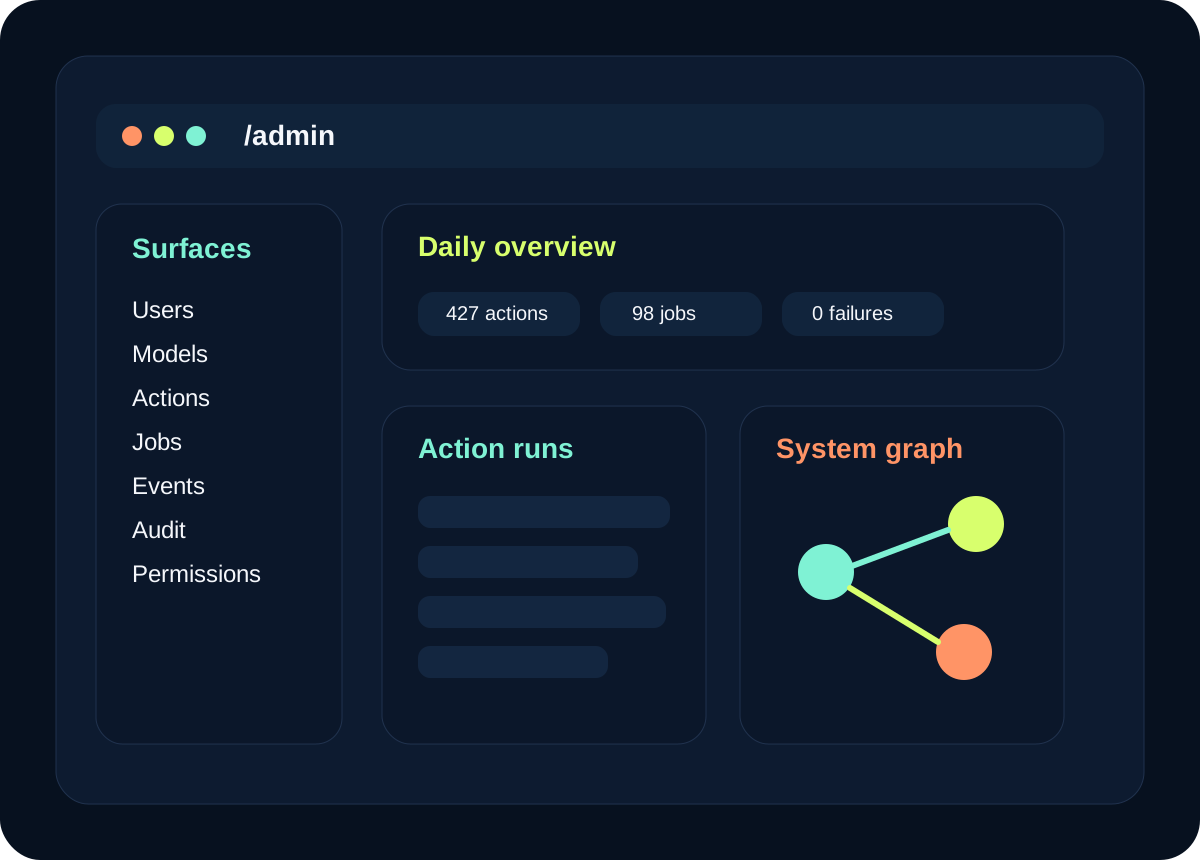
  • Expose the architecture through CLI and admin interfaces
  • Turn operational behavior into searchable product knowledge

Workflow

Define once, generate wide, customize precisely

Zex is designed to keep repetitive work automated while preserving clear ownership over the last mile of behavior and design.

Define the domain once Use schema files and model metadata as the source of truth for entities, relationships, actions, and generated interfaces.
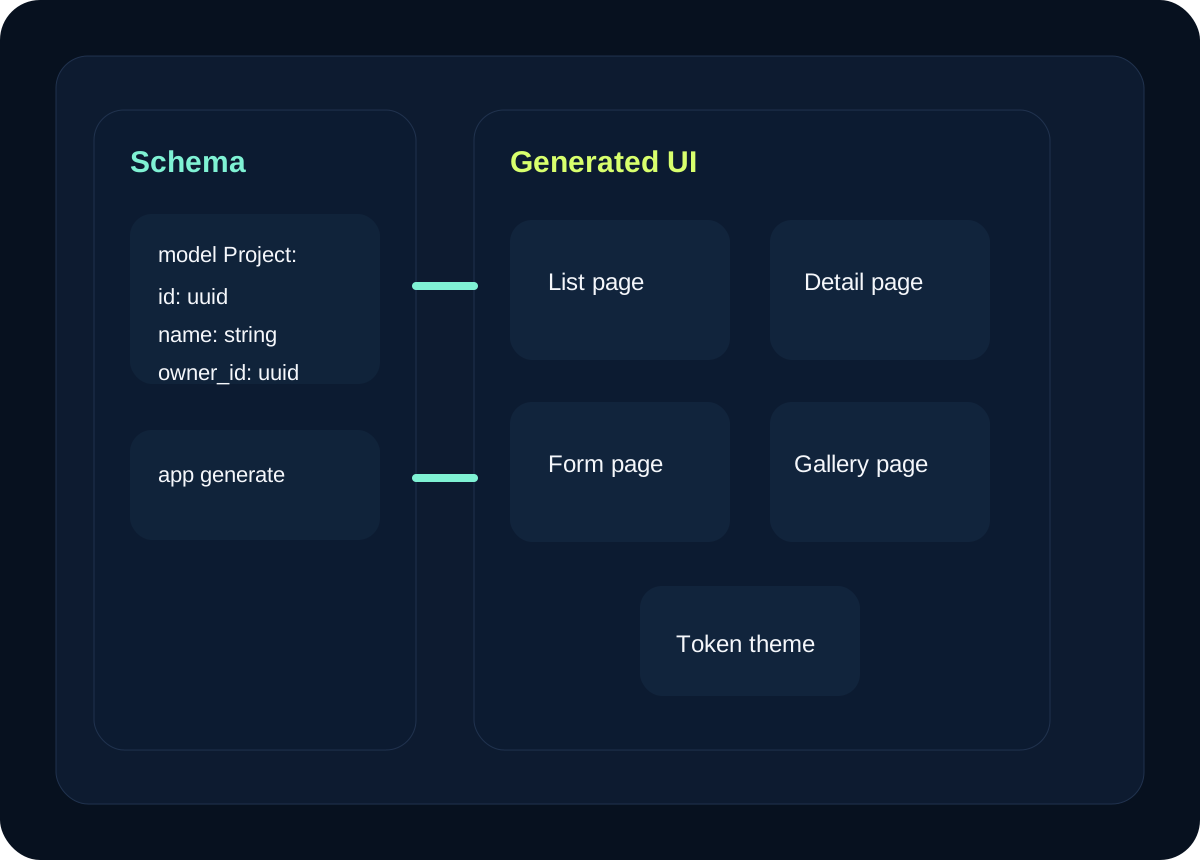
Generate the full stack Produce migrations, Go models, actions, routes, TypeScript clients, admin views, and frontend forms from a single contract.
Customize the last mile Use hooks, slots, extension points, themes, and UI specs to shape product-specific behavior without fighting generated code.

Comparison

Positioned between frameworks, not trapped by one lineage

Zex borrows the parts teams love, then adds a machine-readable project model and action-graph observability that most stacks still treat as optional.

CapabilityZexLaravelPocketBaseRaw Go stack
One-command full-stack bootstrapDesigned for instant full-stack project setupStrong CLI scaffoldingSimple starter setupManual composition
Machine-readable framework brainFirst-class metadata files for AI toolingMostly convention basedLimited project metadataCustom implementation required
Action graph observabilityBuilt into the architectureRequires packages and custom designMinimal by defaultBuild it yourself
Single binary backend deployCore positioningNot nativeNativeNative
Multi-frontend generation from one specSvelte, Vue, React, Capacitor from one contractSeparate ecosystemsAdmin-oriented UI onlyCustom build pipeline
Secure defaults with audit-first workflowsPolicy, audit, tool permission modelPossible with ecosystem packagesBasic defaultsDepends on team discipline

Gallery

A launch site with real product texture

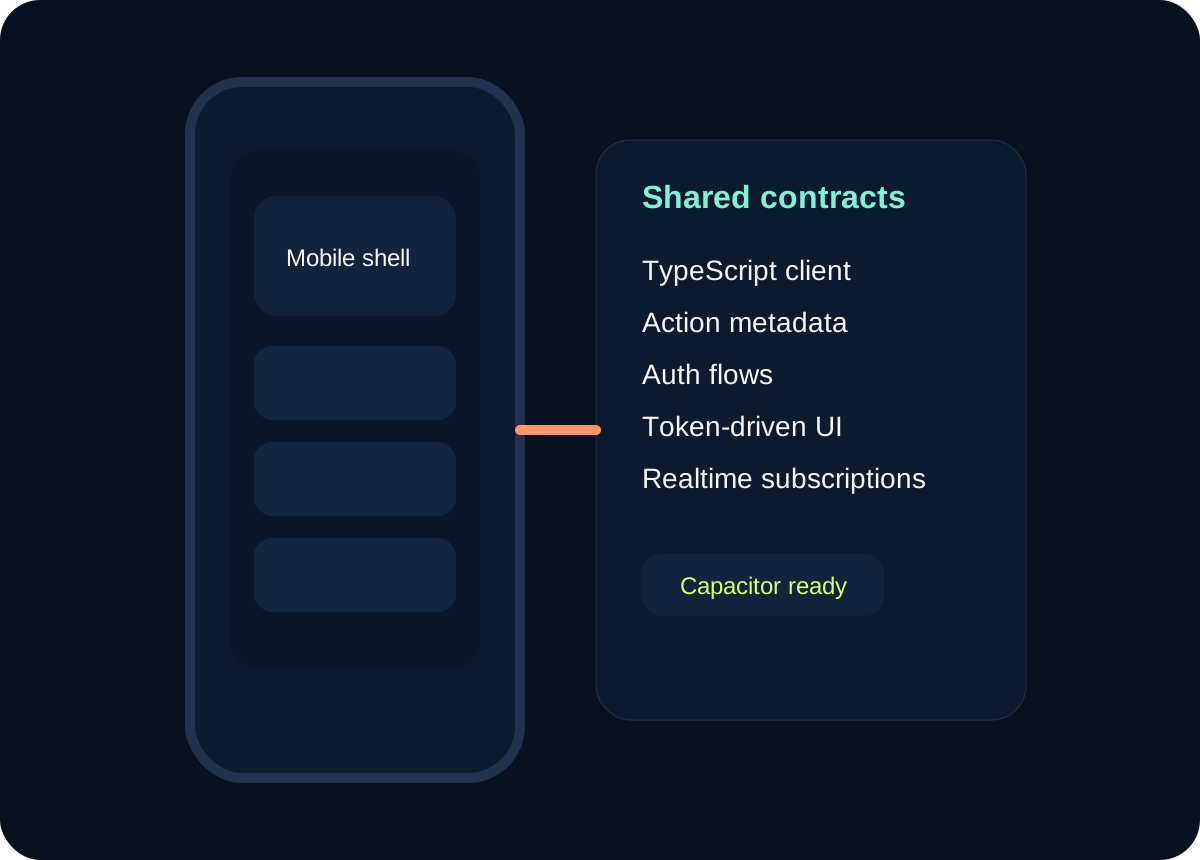
These self-contained visuals sketch the operating model: schema studio, generated admin, action graph, mobile shell, and the framework brain behind them.

Docs and examples

Read the architecture before you write a line of code

The docs explain the first-class primitives, schema-driven generation, action flow, tools and MCP, deploy model, and how the framework brain keeps humans and assistants aligned.

Open source and sustainability

Keep the core open. Fund the layers that scale the ecosystem.

The site includes a Stripe-ready donation flow for teams who want to support framework development while the framework roadmap moves from architecture to implementation.

Blog

Writing for builders who care about architecture

Three launch articles are included to support SEO, explain the product direction, and give the framework a stronger voice than a typical placeholder landing page.
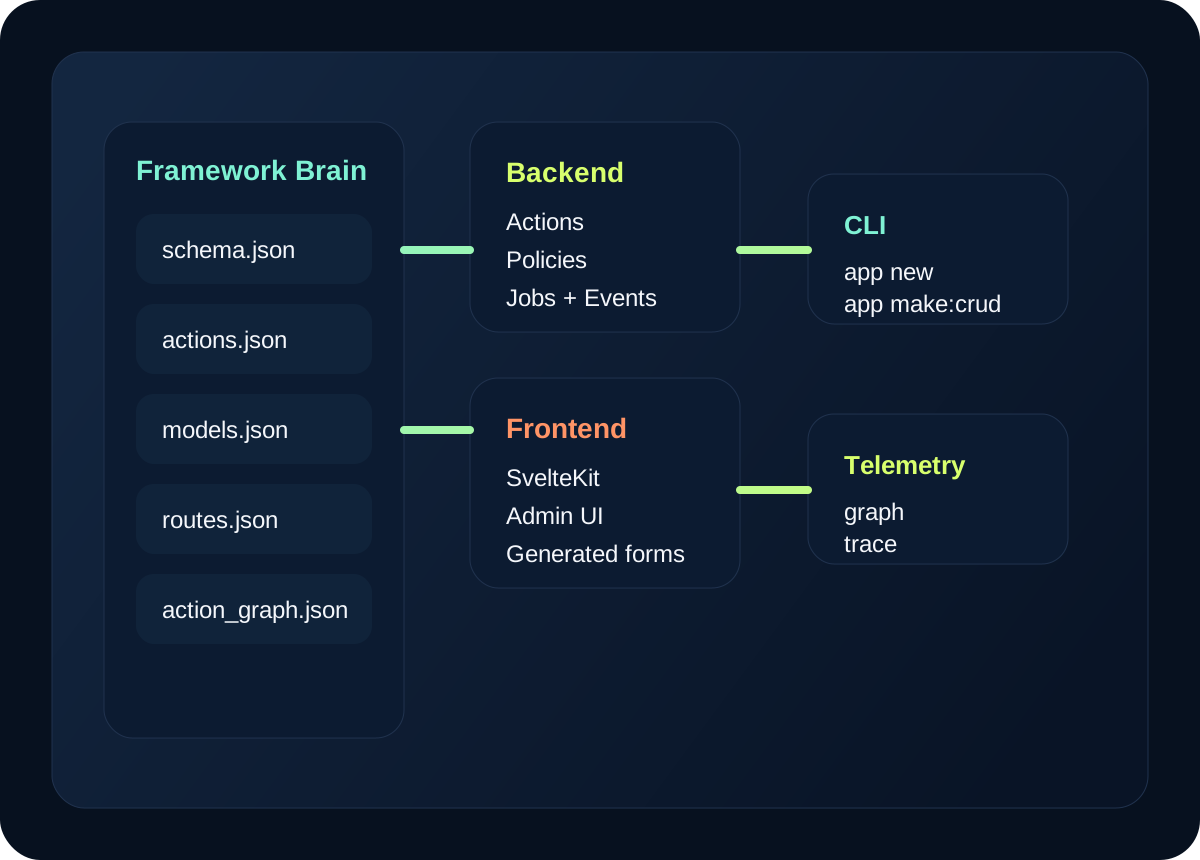
Why AI-native frameworks need a framework brain
Architecture 6 min read March 12, 2026

Why AI-native frameworks need a framework brain

Conventions are helpful, but LLM tooling needs explicit project metadata to reason accurately. Zex treats that metadata as a first-class part of the architecture.

Read article
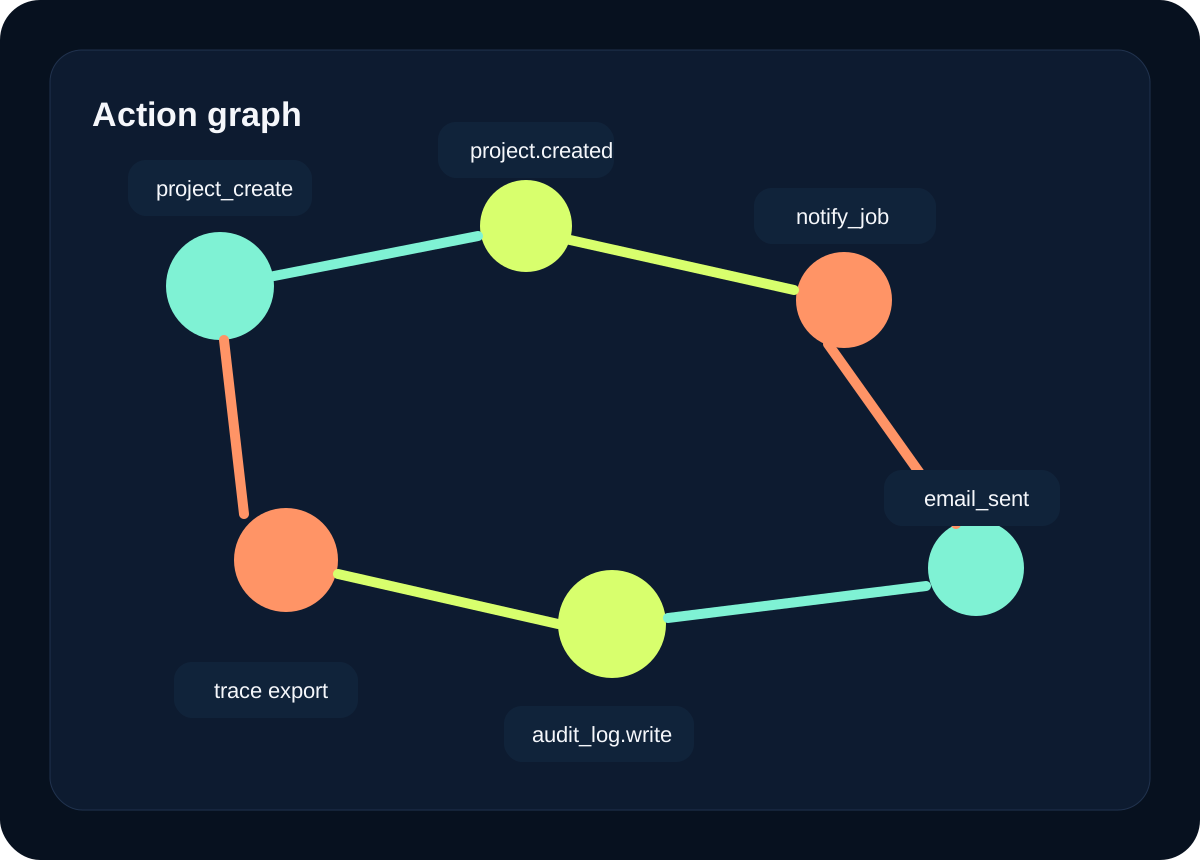
Actions, not controllers: the case for one workflow per unit of work
Backend design 5 min read March 9, 2026

Actions, not controllers: the case for one workflow per unit of work

Controllers are often too coarse for modern products. Zex treats actions as the real business primitive so logic, permissions, and events stay visible.

Read article
Generate everything, customize the last mile
Developer experience 7 min read March 5, 2026

Generate everything, customize the last mile

Most full-stack products repeat the same patterns. The opportunity is not to romanticize manual setup, but to build a safer boundary between generated scaffolding and custom product work.

Read article
FAQ

Clear positioning, no hand-wavy magic

The messaging keeps the ambition high while staying honest about what is already defined versus what still belongs to the roadmap.

Is Zex positioned as a real framework or just an idea?

Zex is presented as a real framework direction with a defined CLI, architecture, and product scope. The site stays honest about roadmap items while treating the framework as something meant to be built and adopted.

Why combine Go, multi-frontend generation, and Laravel-inspired DX?

Because teams usually have to choose between performance, frontend flexibility, and developer ergonomics. Zex is built around the idea that they should reinforce each other instead of competing.

What makes it AI-native instead of AI-adjacent?

The framework keeps a machine-readable model of itself. That means LLMs can inspect models, actions, tools, routes, and event graphs as explicit data instead of inferring everything from naming convention and folder luck.